




Our news
Why are many heavy goods vehicle workshop pits non-compliant?
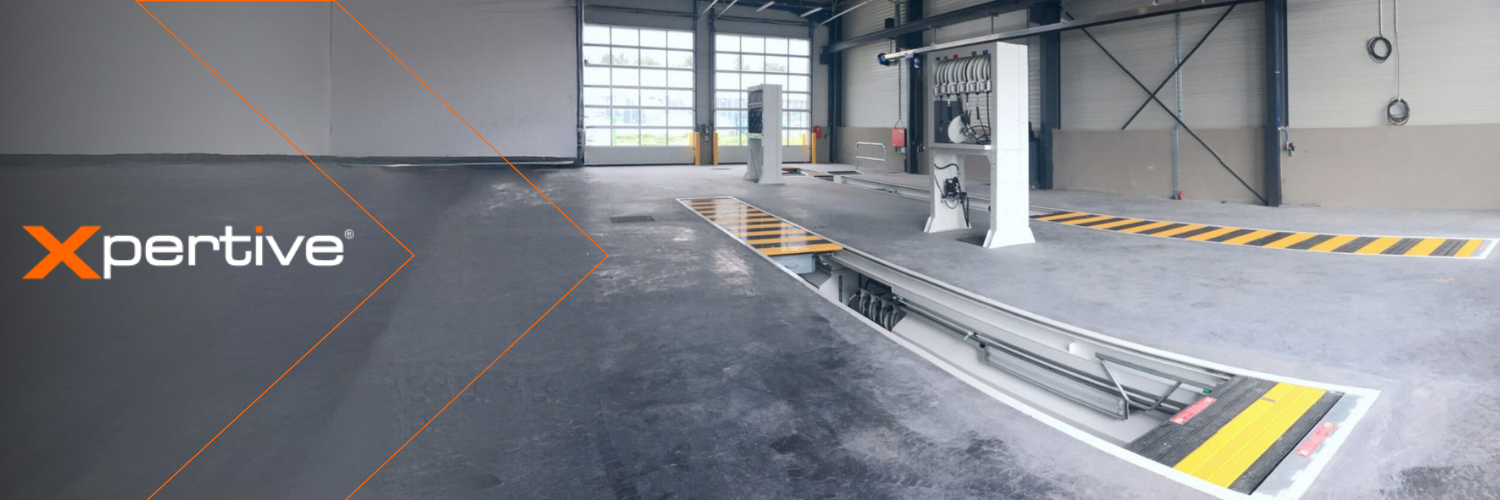
In a workshop, everything seems to be organised around vehicles, workflows and equipment. Yet one discreet element alone concentrates a large part of the risks: the workshop pit.
Often integrated for years, sometimes even since the construction of the building, it is used daily without ever truly being questioned. It is part of the scenery. And that is precisely where the problem lies.
For behind this apparent banality, the pit is actually one of the most sensitive areas in the workshop. Safety, regulations, work organisation: everything converges on this space, all too often seen as a mere technical structure, whereas it directly dictates the overall operation of the activity.
Why is the workshop pit a major risk area?
Working in a pit isn't just about working underneath a heavy goods vehicle. It's operating in an environment where multiple risks combine, sometimes invisibly.
The INRS studies clearly identify two major hazards: falls from height and the build-up of exhaust gases, which can lead to poisoning, fire or even explosion.
Added to this are often underestimated risks: falling objects, slips, physical strain or even concurrent activities between operators.
What makes the pit particularly critical is not the intensity of a single risk, but their combination. In a workshop, these situations are not exceptional: they are an everyday occurrence.
And more broadly, falls from height remain a major issue in the workplace. They are among the main causes of serious and fatal accidents.
INRS guide to the prevention of risks from falls from a height.
An issue rarely anticipated
If pits present so many risks, why are they still so often poorly secured?
The first explanation relates to perception. In many projects, the pit is still considered a secondary element. A “simple hole” in the floor, necessary for working under vehicles, but rarely thought of as a workspace in its own right.
This vision leads to a second consequence: an insufficiently anticipated design. The recommendations yet the CARSAT and the INRS remind us that prevention must be integrated from the design stage, taking into account ventilation, access, movement and protective devices.
In reality, these elements are often added afterwards. We adapt, we correct, we compensate. But we don't structure.
Finally, compliance frequently happens too late. It is triggered by an inspection, an audit or an incident. In other words, in a reactive logic, rather than a preventative one.
Frequent… and widely widespread mistakes
On the ground, certain situations come up systematically.
The lack of physical protection is undoubtedly the most obvious. An open, uncovered pit remains a permanent fall hazard in an environment where movement is frequent.
Ventilation is another critical point. Exhaust gases can accumulate rapidly in a confined space. Indeed, technical recommendations provide for suitable capture and extraction systems to prevent such situations.
Added to this is often an unsuitable layout: poorly defined traffic flow, overlapping work areas, and a lack of separation between activities.
These situations are not isolated. They are the reflection of a more systemic problem: the septic tank is rarely conceived of as a system.
Very real consequences for businesses
The risks associated with pits are not limited to theoretical considerations. They have concrete impacts on several levels.
- On a human level, the consequences can be serious. Falls, poisoning or accidents related to co-activity can lead to significant injuries, or even lasting disabilities.
- From an organisational perspective, a poorly designed pit disrupts workshop operations. It slows down interventions, creates traffic bottlenecks and generates hazardous situations.
Finally, regulatory issues are far from secondary. The employer is required to guarantee the safety of their employees. An unsecured pit can be considered a breach of this obligation.
How to know if your septic tank is truly compliant?
The compliance of a septic tank does not merely come down to its presence or general condition. It is based on a comprehensive analysis.
Several questions help to assess the situation:
- is the pit equipped with a fall-prevention device?
- Is the ventilation suitable for the operating conditions?
- Are the traffic flows secured around the pit?
- Are the risks identified in the single risk assessment document?
In many cases, these elements exist... but they are not consistent with each other.
Rethinking the inspection pit as a work tool
The solution does not rely solely on the addition of equipment. It is based on a global approach.
- Securing a pit first involves integrating suitable physical protection, such as a cover to eliminate the risk of falling.
You can also discover the solutions of Pit cover proposed by Xpertive to effectively secure your workshop.
- It also means ensuring effective ventilation to prevent the accumulation of gas. Finally, it involves organising the workspace to make movement smoother.
In other words, it is not a matter of fixing a one-off problem, but of redesigning the pit as a genuine working tool.
This is the rationale behind the approach of Xpertive, a specialist in the design and securing of workshop pits, which has been supporting companies with their projects for over 10 years. Rather than treating the pit as a mere product, the aim is to integrate it into a comprehensive strategy, taking into account the actual constraints of the workshop.
For example, Xpertive’s solutions make it possible to integrate all security, performance and compliance requirements right from the design stage. These solutions are designed to be directly compliant with INRS and CARSAT recommendations, while integrating the equipment required for workshop operations.
Conclusion
The workshop pit is an element that we think we have mastered... because it is familiar. Yet, it concentrates major technical, human and regulatory issues.
If many septic tanks are non-compliant today, it is not for lack of resources, but for lack of foresight. They were designed to meet a need, but not always to guarantee safety and performance over the long term.
Rethinking the pit ultimately means rethinking the workshop as a whole. And that is often where a genuine improvement process begins.
Do you have a project in mind or would you like to evaluate your setup?
Xpertive's teams can support you in structuring your approach and securing your workshop.
👉 Contact Xpertive for a diagnosis